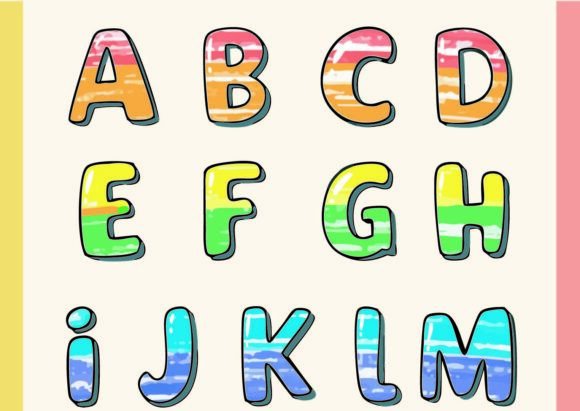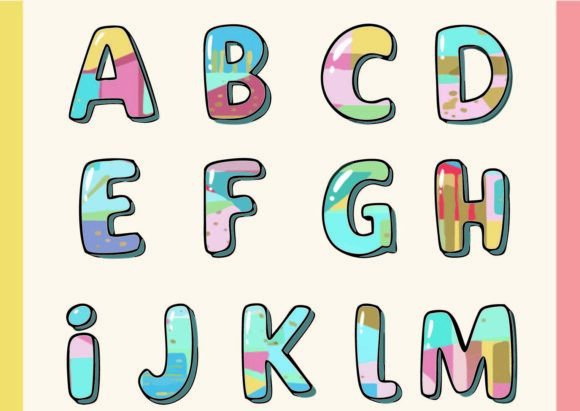
Ember: A Vibrant Color Fonts Collection for Handmade Creators
As a handmade business designer who’s shipped over 12,000 custom mugs, planner stickers, and seasonal gift tags since 2018—and who relies on Cricut projects, Silhouette projects, and printable designs daily—I opened Ember with real curiosity. Not hype. Not marketing fluff. Just the quiet hope that this color font would finally deliver what so many “vibrant” fonts promise but rarely deliver in real-world crafting: personality *and* practicality.
First impression? Ember feels like sunshine hitting stained glass—warm, layered, alive. It’s not cute or minimalist. It’s not rustic or stark. It’s boldly decorative yet surprisingly elegant, with a joyful, hand-painted energy that leans festive without tipping into cartoonish. Think holiday gift tags that catch eyes at craft fairs, birthday party favor labels that pop on pastel packaging, or summer tumbler wraps that shimmer under natural light. Your ideal customer? The thoughtful gift-giver, the Etsy shopper who loves tactile charm and intentional design—not mass-produced sameness.
Ember is a color font—meaning every letter, number, and symbol arrives pre-colored with its own unique palette. No manual layering. No guessing which shade of coral goes with which blush. Every glyph is built from multiple vector paths, each assigned a precise fill, creating depth and dimension you simply can’t replicate with standard fonts. That complexity is Ember’s superpower—and its gentle warning label.
Where Ember Shines in Real Handmade Workflows
For Cricut users: Ember shines brightest as an SVG design for large-format cuts—think 4"–6" monograms on tote bags, oversized vinyl quotes for nursery walls, or layered acrylic gift tags. Its chromatic richness translates beautifully to printed vinyl, especially when paired with matte white or kraft cardstock. I tested it on my Cricut Maker 3 using Smart Vinyl—no registration issues, clean cut lines, and zero ghosting between color layers.
For Silhouette users: Import the SVG version directly into Silhouette Studio. Ember holds up well in Print & Cut workflows for sticker design—especially planner stickers and greeting card accents—so long as you keep dimensions above 1.5". The embedded colors preview accurately, saving hours of manual recoloring.
For printable product creators: Ember is pure magic in digital products. I dropped it into a set of printable wall art (8x10 and 11x14) and watched how the subtle gradients added warmth to neutral home offices. It also elevated a bundle of printable gift tags—no extra illustration needed. As a graphic design asset, Ember reduces your need for clipart or illustration overlays, streamlining production.
For sublimation design and print-on-demand: Export high-res PNGs with transparent backgrounds (300 DPI minimum), then test on white and light-gray mugs first. Ember’s saturated tones hold beautifully on ceramic and polyester blends—but avoid dark substrates unless you’re using it as a standalone accent (e.g., a single colorful “Joy” on a navy tumbler wrap).
Where to Use Ember Thoughtfully
Don’t force Ember into tight spaces. At under 1" tall, fine strokes blur, color edges soften, and readability suffers—especially on small sticker sizes or thin vinyl decals. Skip it for tiny address labels or micro-printed thank-you cards.
Avoid crowded compositions. Ember’s layered paths demand breathing room. Pair it with generous negative space—or simplify surrounding elements (e.g., use a clean sans serif for body text if Ember headlines your greeting card).
Layered vinyl projects? Proceed with care. While Ember’s SVG separates cleanly by color group, aligning six+ vinyl layers manually isn’t realistic for batch production. Reserve it for premium one-off items—like personalized wedding coasters—where that hand-finished feel justifies the extra time.
Practical Crafter Notes You’ll Actually Use
- Always test before selling: Cut one mug decal, print one gift tag, and mock up one planner sticker before adding Ember to your Etsy product listings.
- Check SVG line integrity: Open the file in Inkscape or Illustrator—zoom in on junctions. Look for stray anchor points or overlapping paths that could cause cutting errors.
- Preview PNG transparency: Drop the PNG into Canva or Photoshop over black and white backgrounds. Confirm no faint halos or semi-transparent fringes.
- Confirm commercial licensing: Ember includes a commercial license—yes, for customer orders, craft fair sales, and digital product bundles—but double-check the license PDF for limits on POD platforms or resale as standalone clipart.
- Resize intentionally: Ember scales beautifully up to 12", but avoid stretching below 0.75". If your design needs smaller text, use Ember for headlines only and pair with a crisp sans serif (like Montserrat or Poppins) for details.
- Mock it on real products: Use Placeit or Smartmockups to drop Ember into t-shirt, mug, and tote bag templates—then step back. Does it still feel joyful? Or does it look busy? Trust your gut.
- Pair with purpose: Ember sings beside handwritten fonts (for contrast) and elegant serifs (for balance). Avoid pairing it with other chromatic fonts or overly ornate scripts—they’ll compete, not complement.
Ember isn’t a “set-and-forget” font. It’s a design partner—one that asks for attention, rewards intention, and pays off in customer comments like “This feels so special!” and “I’ve never seen lettering like this.” For handmade business owners building seasonal collections, launching new Etsy products, or refreshing small business branding, Ember delivers visual distinction without sacrificing craft-friendly functionality.
Whether you’re prepping for holiday markets, designing a spring sticker bundle, or crafting limited-edition sublimation mugs for a local coffee shop collab—Ember adds warmth, whimsy, and unmistakable handmade soul. Just remember: let it breathe, test it early, and trust its color-rich voice to do the talking.