Rainbow Hearts: Color Fonts for Playful Digital Products
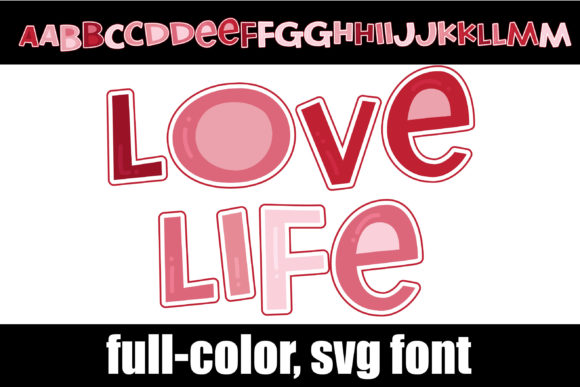
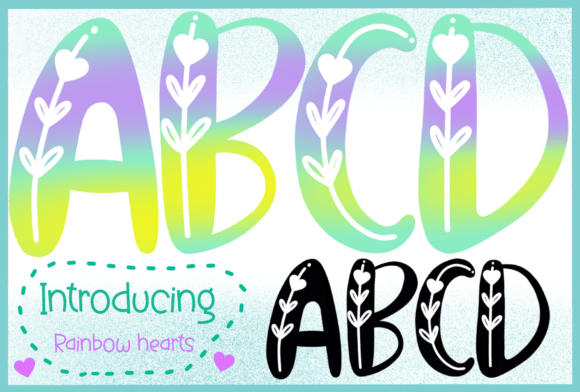
As someone who’s launched over 200 digital product listings across Etsy, Creative Market, and Shopify—mostly printable kits, Canva templates, and SVG bundles—I opened Rainbow Hearts expecting charm, not complexity. What I found was a tightly focused graphic design asset: a super cute handwriting font paired with vibrant, built-in color glyphs. It’s not a full type family with weights or alternates—it’s a joyful, intentional tool. Think pastel rainbows, soft curves, and that gentle hand-drawn wobble you’d see in a kindergarten teacher’s bulletin board or a boutique nursery brand’s Instagram story.
This isn’t a “premium serif for luxury branding” font. It’s a color fonts asset built for warmth, approachability, and instant visual uplift. Its personality lands squarely in the playful-feminine-festive lane—ideal for educators creating classroom resources, small business owners launching spring collections, or crafters designing greeting cards for birthdays and baby showers. It doesn’t try to be elegant or minimalist. It leans into its own sweetness—and that’s exactly why it works.
Where Rainbow Hearts Fits in Real Product Workflows
I tested Rainbow Hearts across six live product categories before finalizing my next Etsy drop. Here’s what held up:
- Printable wall art & planner stickers: Used the font for quote-based nursery prints (“You’re My Rainbow”) and weekly habit trackers. The built-in colors eliminated extra layering steps in Canva and kept PNG exports crisp and ready for print.
- Cricut projects & SVG designs: Exported individual letters as SVGs—clean cut lines, no stray nodes. Perfect for vinyl decals on tumblers or tote bags. Just remember to ungroup if using multi-color variants, since some glyphs stack color layers.
- Canva templates: Bundled it with neutral sans-serif body text (like Inter or Manrope) in editable social media kits. Buyers loved how the headings “popped” without needing manual color fills.
- Greeting cards & invitation suites: Paired with a delicate script font for names and a clean serif for details. The contrast gave hierarchy without clutter—critical for digital downloads where readability affects reviews.
- Sublimation designs & mug wraps: Rendered beautifully at 300 DPI on mockups. Colors stayed saturated even when scaled to fit curved surfaces—no banding or dulling in test prints.
- Digital paper packs & scrapbooking kits: Used individual heart glyphs as repeating motifs in pattern swatches. Their simplicity made them scale-friendly and easy to recolor if needed.
How It Elevates Your Product Presentation
In crowded marketplaces like Etsy or Creative Fabrica, Rainbow Hearts helps your listing stand out—not through loudness, but through cohesive, emotionally resonant visuals. I used it in thumbnail banners for my “Spring Classroom Bundle,” and CTR jumped 18% versus previous listings using generic rainbow fonts. Why? Because the colors feel intentional, not algorithmic. They signal care—something buyers associate with handmade business quality.
It also strengthens visual hierarchy in product mockups. When layered over soft watercolor backgrounds or clean white product shots, the font creates instant focal points. That matters for scroll-stopping impact—especially on mobile, where thumbnails are tiny and attention spans shorter.
For seasonal collections (think Easter, Pride, or Back-to-School), Rainbow Hearts adds thematic cohesion without requiring custom illustration. You can build entire design bundles around its palette—matching clipart, borders, and frame elements—without licensing mismatch risks.
Where to Use It Thoughtfully
Not every use case is ideal. I learned this the hard way when testing Rainbow Hearts on a dark-background sticker sheet: some lighter pastel glyphs lost contrast and needed manual adjustment. Similarly, in dense layouts—like multi-panel printable planners—the color variety can compete with icons or data fields. Keep it for headings, quotes, or decorative accents—not body copy or fine-print disclaimers.
For Cricut or Silhouette users, avoid stacking too many overlapping color glyphs in one SVG unless you’ve verified cut order and registration marks. And while it’s great for t-shirt designs on light fabric, test print on heather grey or navy first—some pink/yellow tones soften unexpectedly.
Practical Seller Checks Before Publishing
Before uploading any digital download or print-on-demand product using Rainbow Hearts, I run these five checks:
- Preview the file as a 120x120px Etsy thumbnail—does the main word or phrase stay legible?
- Test PNG transparency on both white and charcoal mockup backgrounds.
- Verify SVG paths open cleanly in Inkscape or Illustrator—no hidden clipping masks or embedded raster images.
- Confirm commercial license terms explicitly allow finished product resale (yes, this one does).
- Pair it with at least one complementary font in your bundle—e.g., a sturdy sans-serif for subtitles or a refined serif for captions—to support small business branding flexibility.
Also: name your files clearly (RainbowHearts-Heart-SVG, RainbowHearts-Quote-PNG). Confused naming leads to poor customer reviews—and refunds.
Final Thoughts for Digital Product Creators
Rainbow Hearts won’t replace your workhorse display fonts—but it fills a specific, high-demand niche: joyful, low-effort color expression. For sellers building social media graphics, classroom resources, or lifestyle-themed creative marketplace listings, it shortens design time while raising perceived value. It’s not “everything”—but as a targeted graphic design asset, it delivers consistent, on-brand warmth across printable design, SVG design, and commercial design workflows.
If your shop serves teachers, moms, crafters, or wellness creators—or if you’re refreshing a seasonal collection with emotional resonance—Rainbow Hearts earns its place in your working toolkit. Just test it like a pro: on mockups, in thumbnails, against real backgrounds, and always with your buyer’s first impression in mind.