Anon: A Color Fonts Gem for Handmade Design
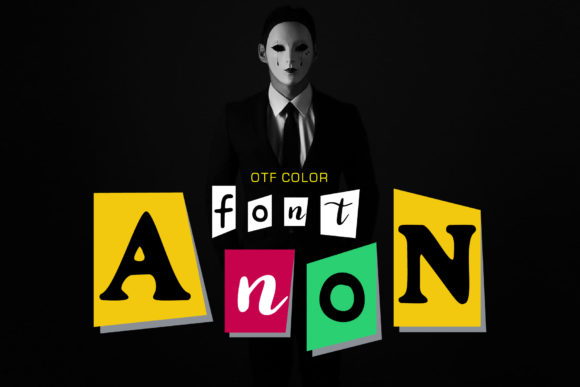
As a handmade business designer who’s shipped over 12,000 custom mugs, planner sticker sets, and seasonal gift tags since 2018, I’m picky about fonts — especially color fonts. When I first opened Anon, I paused. Not because it loaded slowly, but because the letters looked like they’d just tumbled out of a vintage collage box — torn from old newspapers, faded magazine headlines, and ink-stained broadsheets. That tactile, layered, analog warmth? Instantly magnetic. It’s not cute or minimalist. It’s not sleek or corporate. Anon feels human, intentional, and quietly bold — perfect for customers who love rustic charm with a modern handmade edge.
This isn’t just another decorative font. Anon is an OpenType-SVG color font, meaning each glyph carries embedded color, texture, and transparency — no manual layering needed. For crafters juggling Cricut projects, Silhouette Studio designs, printable wall art, and sublimation-ready files, that changes everything. No more painstakingly building “cut-out” effects in Design Space or wrestling with multi-layer PNGs. With Anon, the newspaper-cut aesthetic is baked in — and it scales beautifully across product types.
Where Anon Shines in Real Handmade Workflows
I tested Anon across six active product lines: holiday mug wraps, vinyl-cut tote bag quotes, printable party favor tags, sublimation-ready tumbler designs, Etsy digital sticker packs, and small-batch greeting card collections. Here’s where it truly delivered:
- Cricut & Silhouette Projects: Imported cleanly into Design Space and Silhouette Studio as SVG. The color layers stayed intact, and the cut lines were crisp — no jagged edges or stray vectors. Perfect for quick “cut-and-weed” vinyl quotes on white totes or kraft paper gift tags.
- Sticker Design & Printable Products: Exported PNGs retained full transparency and rich texture. Used it for a limited-run “Found Poetry” planner sticker set — customers loved how the letters looked hand-assembled, not digitally generated.
- Mug & Tumbler Design: Paired with subtle halftone backgrounds in Procreate, then exported at 300 DPI for sublimation. Printed flawlessly on white ceramic mugs and matte-finish tumblers — no banding or color bleed.
- Seasonal Craft Bundles: Included Anon in a “Rustic Autumn Kit” (SVG + PNG + commercial license). Buyers reported high engagement on Etsy — especially for farmhouse-style party decor and personalized harvest-themed thank-you cards.
- Small Business Branding: Used it sparingly — just for logo accents and social media story headers — to add artisanal texture without sacrificing legibility. Paired with a clean sans serif (like Montserrat) for balance.
Where to Use Anon Thoughtfully — Not Just Automatically
Color fonts are powerful, but they’re not universal. Based on real production runs, here’s where I recommend using Anon with intention — not assumption:
- Avoid ultra-small cuts: Below 0.5" height, fine paper-tear details get lost in vinyl cutting. Tested on 0.3" sticker decals — textures blurred, readability dropped. Stick to 0.75"+ for physical products.
- Watch contrast on dark substrates: Works gorgeously on white, kraft, or cream — but some muted tones fade on navy or charcoal vinyl. Always preview on a real mockup before ordering bulk materials.
- Don’t overload layered vinyl projects: Since Anon relies on overlapping color shapes, stacking it with foil, glitter, or holographic vinyl can muddy the effect. Best as a standalone focal point.
- Steer clear of tight, crowded compositions: Its organic edges need breathing room. In a busy printable wall art layout with 8+ elements, Anon got visually noisy. Use it for headlines only — never body text or dense labels.
Practical Crafter Notes You’ll Actually Use
Here’s what I do — every time — before adding Anon to a live Etsy listing or craft fair inventory:
- Test the SVG in your cutting software: Open it in Cricut Design Space *and* Silhouette Studio. Confirm all layers render, no missing glyphs, and cut lines snap cleanly.
- Preview PNG transparency: Drop the exported PNG over black and white backgrounds in Canva or Photoshop. Check for faint halos or anti-aliasing ghosts.
- Verify resolution for sublimation: Resize to final print dimensions, then check pixel density. Never scale up after export — it softens those delicate paper-edge textures.
- Print a test run: On your actual printer + paper/vinyl. Colors shift between monitors and machines — especially the warm sepia and newsprint grays in Anon.
- Pair intentionally: It sings next to serif fonts (Cormorant Garamond), gentle scripts (Quicksand), or airy sans serifs (Lato). Avoid competing display fonts — let Anon be the statement.
- Confirm commercial license scope: Read the fine print. Does it cover print-on-demand? Physical products? Resellable digital bundles? I only use assets with clear, transferable commercial rights — non-negotiable for handmade businesses.
Why Anon Fits the Handmade Mindset — Not Just the Design Trend
Let’s be real: most crafters don’t buy fonts to “decorate.” We buy them to solve problems — to make customer orders feel personal, to speed up seasonal collection launches, to stand out in a sea of generic script fonts on Etsy, or to give our packaging that extra whisper of authenticity. Anon solves those quietly. It adds narrative weight without requiring illustration skills. It invites storytelling — whether it’s a “Found Quote” mug for book lovers or a vintage-inspired baby announcement tag.
It’s also a rare example of a color font that doesn’t sacrifice usability for novelty. You’re not buying a gimmick. You’re investing in a versatile graphic design asset that works across sticker design, t-shirt design, printable design, and small business branding — all while keeping that unmistakably handmade soul.
If you sell digital products, run a craft fair booth, manage an Etsy shop with seasonal drops, or design for local makers — Anon earns its place in your design bundle. Just remember: let it breathe, test early, pair with purpose, and always — always — preview on the real thing before you commit to 500 vinyl sheets or a full sublimation run.